A boat can change the rhythm of a Miami weekend. The question is whether you want the boat to create the action or comfortably carry everyone to it. In the towboat versus pontoon boats conversation, that distinction matters more than a spec sheet. One is built around a precise watersports experience; the other is built around open-air social time and relaxed cruising.
For families considering a premium boat, both can deliver memorable days on Biscayne Bay, inland waterways, or a favorite waterfront restaurant. The right choice depends on how your guests spend time on the water, how often watersports are part of the plan, and whether performance is a priority or simply a nice addition.
Towboat versus pontoon boats: the central difference
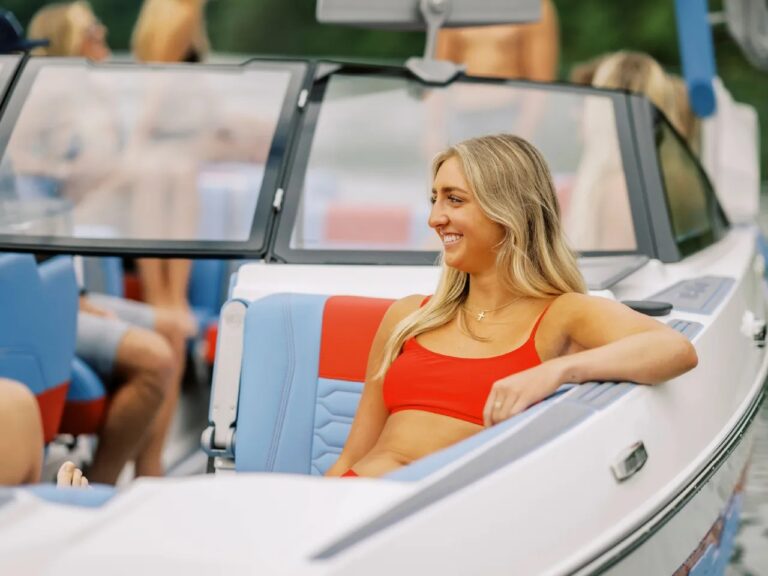
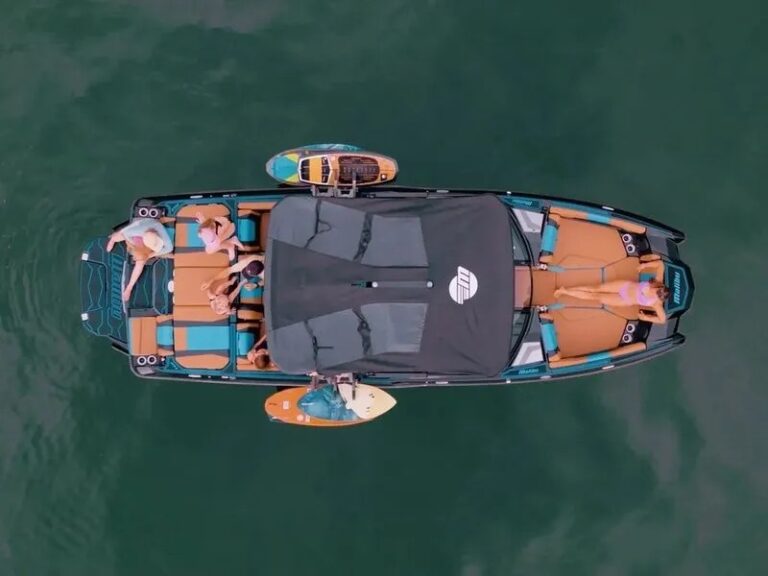
A towboat, often called a wake boat, is purpose-built to pull riders and shape the water behind it. Modern inboard models from Malibu Boats and Axis Wake use ballast, hull design, wake-shaping technology, and speed control to create a consistent wake or surf wave. The boat is not merely transporting riders to the activity. It is the activity.
A pontoon boat is designed around space, stability, easy socializing, and low-stress cruising. Its broad deck, perimeter seating, and level ride at rest make it a natural gathering place. Many pontoons can tow a tube or skier, particularly when properly powered, but they are not engineered to produce the clean, adjustable wake or long surf wave that defines a dedicated wake boat.
The terminology deserves a quick clarification. A true towboat can also refer to a commercial vessel that pushes barges. In recreational boating, buyers commonly use towboat to mean a wake boat or watersports boat. That is the meaning used here.
Choose a wake boat when the pull is the point
If your family sees wakesurfing, wakeboarding, or waterskiing as a regular part of boating life, a wake boat offers an experience a pontoon cannot replicate. A properly set up surf boat creates a surfable wave with push, shape, and length that can be tuned for different riders. Beginners benefit from a predictable pull and a manageable wave, while experienced riders can refine their preferred settings.
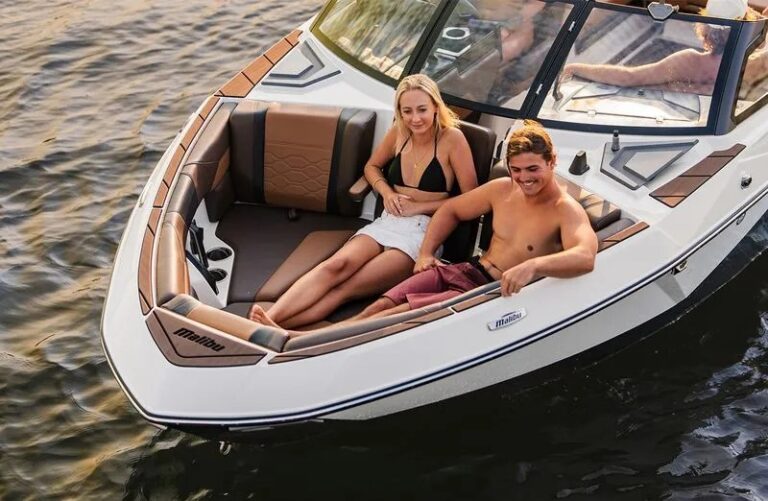
Malibu and Axis wake boats are particularly compelling for owners who want this performance without treating every outing like a tournament session. A Malibu M-Series, LSV, MXZ, LX, or Crossover model can pair watersports capability with premium upholstery, thoughtful storage, entertainment features, and the confident handling that makes a full day on the water feel composed. Axis A-Series and T-Series models bring a focused, energetic approach to wake performance for buyers who want maximum time behind the boat.
Wake boats also tend to feel more secure and intentional at watersports speeds. Their inboard propulsion places the propeller beneath the hull, rather than behind the boat, which is a meaningful design consideration when people are entering the water for surf sessions. Their helm layouts, towing mirrors, rider communication, and speed-management systems are built for the driver who wants to give every rider a better pull.
There are trade-offs. Wake boats have deeper-V or specialized hull characteristics, more mechanical systems, and a more focused operating profile. They are a premium choice for an owner who values performance, refinement, and repeatable results. If the boat will rarely pull anyone, much of that capability may go unused.
Wake boats bring more than a surf wave
The strongest case for a wake boat is not limited to the rider. It is the rhythm of a day that includes an early glass-water ski set, relaxed cruising, lunch at the sandbar, a surf session with friends, and an evening run home. The driver has more control over how the boat responds, while passengers enjoy a more crafted onboard environment.
This is where model selection becomes personal. A family that hosts frequently may prioritize seating and social space. An owner focused on surf performance may favor a hull and ballast package suited to a larger, more adjustable wave. A buyer balancing cruising, waterskiing, and towing may prefer a crossover-oriented configuration. The best wake boat for wakesurfing is not always the largest or most luxurious model. It is the one aligned with the people who will use it most.
Choose a pontoon when the deck is the destination
A pontoon boat makes sense when the day is about being together rather than chasing a perfect wake. Its flat, spacious layout makes it easy for multiple generations to settle in, move around, snack, talk, and enjoy the view. For waterfront homeowners and entertainers, that easy hospitality is a real advantage.
Pontoons are especially appealing for calm-water cruising, sunset outings, casual fishing, and leisurely trips where seating capacity is more valuable than sporty handling. Boarding is often straightforward, and the wide deck can be welcoming for children, older guests, and anyone who prefers a stable platform at rest.
A well-equipped pontoon can still be a handsome, enjoyable lifestyle boat. Higher-end models may offer upscale finishes, powerful outboards, shade systems, stereo upgrades, and enough performance for a tube or casual skiing. But performance has limits. A pontoon’s wake is not designed for surfing, and its handling can feel less planted in rougher conditions or higher-speed turns than a purpose-built wake boat.
For many buyers, that is entirely acceptable. If your ideal day involves ten guests, a cooler, a quiet cove, and nowhere urgent to be, the pontoon’s simple social layout may be exactly right.
Consider South Florida water, weather, and storage
South Florida adds practical considerations that should influence the towboat versus pontoon boats decision. Afternoon chop, tidal movement, marina access, bridge clearances, sandbar routines, and available storage all affect how satisfying a boat feels after the first few outings.
Wake boats are often at their best on protected waterways, lakes, and calmer stretches where a clean wake or wave can develop without competing boat traffic and wind chop. They can certainly be used for coastal recreation when conditions are appropriate, but owners should choose their route and weather window carefully. A surf session and an open-bay crossing are very different assignments.
Pontoons also prefer sensible weather planning. Their broad profile can be affected by wind, and while some models are capable in moderate conditions, they are not a substitute for a boat designed around offshore use. For either type, safe operation begins with respecting forecasts, loading limits, local navigation rules, and the changing character of Florida water.
Saltwater care deserves direct attention. Malibu and Axis owners who boat in brackish or saltwater environments should follow manufacturer guidance and a disciplined post-use routine, including thorough flushing where applicable, washing, drying, and regular inspection. Salt accelerates corrosion and makes consistent maintenance more than cosmetic. Storage choice, trailer use, and service access can significantly shape long-term ownership costs.
Ownership costs are about use, not just purchase price
A pontoon may appear simpler to own, but no boat is maintenance-free. Insurance, registration, storage, cleaning, fuel, service, and eventual resale all belong in the buying conversation. A larger, premium wake boat will generally involve a greater initial investment and may require more specialized service attention because of its engine, ballast, electronics, and watersports systems.
In return, it can hold a distinctive place in a buyer’s lifestyle and deliver experiences that are difficult to recreate with a general-purpose boat. That value is most visible when the boat is used often. A family surfing twice a month, hosting friends, and building weekends around the water may find the premium easily justified. A buyer who cruises only a few times per season may prefer the straightforward nature of a pontoon.
Do not overlook towing, slips, and storage. Measure your intended lift or covered storage before falling in love with a model. Consider passenger count honestly, including the captain, and think about what comes aboard: boards, life jackets, coolers, towels, water toys, and the inevitable extra guests. Beautiful boats feel even better when their storage and seating work in real life.
Let your favorite day make the decision
Picture a Saturday six months after delivery. If you imagine dialing in a wave, teaching friends to surf, and enjoying the craft of driving a performance boat, a Malibu or Axis wake boat deserves serious consideration. If you picture a relaxed floating lounge full of family, music, conversation, and a long lunch stop, a pontoon may fit naturally.
Neither answer is universal, and a thoughtful consultation should account for your boating experience, home dock or marina, planned waters, and ambitions behind the boat. At Master Marine Prime, the most valuable part of selecting a wake boat is often the conversation before the selection: understanding how you want to spend your time, preparing you for delivery, and standing beside you as ownership begins. Choose the boat that makes you eager to set the next date on the water, then give it the care and training that will keep those days exceptional.