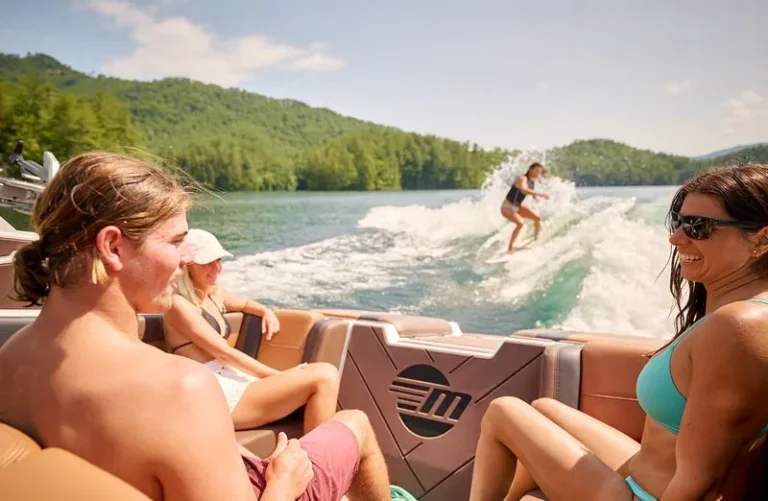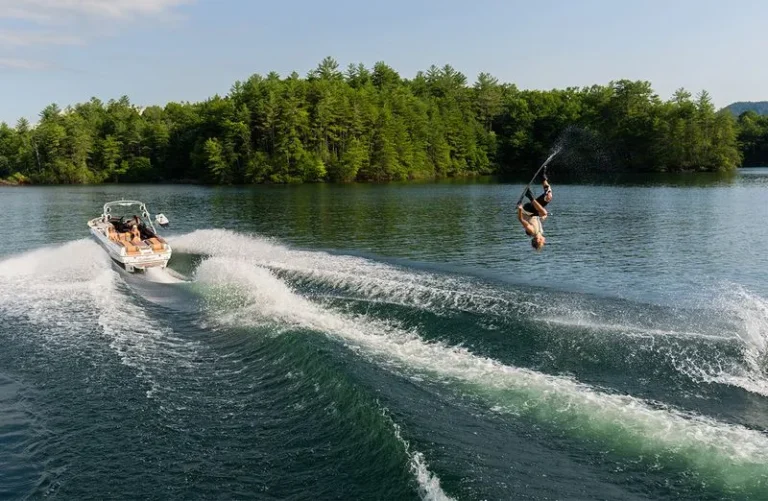
A Saturday on Biscayne Bay and a sunset surf set behind a Malibu ask very different things of a boat. The conversation around inboard versus outboard boats is not about which design is universally better. It is about choosing the platform that fits the way your family actually plans to spend time on the water.
For South Florida owners, that decision can carry more weight than the initial purchase price. Our waterways invite everything from sandbar afternoons and coastal cruising to watersports sessions with friends. The right boat should make those moments feel natural, confident, and worth repeating.
The Essential Difference Between Inboard and Outboard Boats
An inboard boat carries its engine inside the hull, with a driveshaft and propeller positioned beneath the boat. In a direct-drive configuration, the engine sits near the center. In a V-drive boat, the engine is positioned farther aft, which opens the cockpit and creates the familiar social layout found in premium towboats.
An outboard boat mounts its engine, or engines, on the transom outside the hull. That configuration is common across center consoles, dual consoles, fishing boats, and many versatile coastal cruisers. The engines are easy to see, easy to trim, and designed around access to shallow water and broad cruising capability.
That simple mechanical difference shapes nearly every part of ownership: the wake, interior layout, handling characteristics, maintenance access, watersports safety, and where the boat feels most at home.
Inboard Versus Outboard Boats: Start With Your Water Time
The best question is not, “Which engine is better?” Ask what a perfect day aboard looks like.
If it involves wake surfing, wakeboarding, skiing, or teaching kids to ride, an inboard towboat is purpose-built for the experience. The propeller sits safely beneath the hull, away from the swim platform. The hull, propulsion system, ballast, wake-shaping technology, and helm controls work together to create a predictable pull and a repeatable wave.
For a family that wants to host friends, lounge at the sandbar, then surf until sunset, a V-drive inboard also makes excellent use of interior space. The engine remains out of sight beneath the rear sun pad, allowing for a deep, conversation-friendly cockpit and a wide swim platform that becomes the center of the day.
Outboards are often the stronger match for owners whose priorities are coastal range, fishing, island hopping, or running in areas where shallow-water access is a regular consideration. Raising the engines at the dock or when approaching a shallow area is a meaningful advantage. Multiple outboards can also offer reassurance for owners who routinely make longer offshore runs.
Neither choice is a compromise when it aligns with your lifestyle. The frustration begins when a boat is selected for a use case that rarely matches reality.
Why Inboards Lead for Watersports
A premium inboard towboat is engineered around water sports from the keel up. This matters more than horsepower alone.
A Better Wake and Wave
Wake surfing requires a clean, shaped wave with enough push to support a rider without a tow rope. Wakeboarding benefits from a defined, consistent wake with a controllable transition. Waterskiing calls for a flatter, softer wake at speed. An inboard towboat can be configured to support each activity through hull design, ballast management, speed control, and wake-shaping systems.
Models from Malibu and Axis are designed to let owners move between these experiences without turning a family outing into a technical project. The result is more time riding and less time trying to make a boat do something it was not designed to do.
Propeller Safety at the Platform
The propeller on an inboard sits under the boat rather than behind it. For watersports families, this is a major practical advantage. Riders, swimmers, and children naturally gather around the stern and swim platform. A protected propulsion system supports a more comfortable transition between swimming, boarding, and getting underway.
Safe operation still requires attentive captaincy, clear communication, and a proper engine-off routine whenever people are in the water. But the inboard layout is fundamentally more compatible with the way people use the rear of a towboat.
Low-Speed Control and Driver Confidence
Inboards are known for their predictable tracking and direct response, particularly while pulling a rider at controlled speeds. That precision helps a driver hold a consistent line while also watching the rider, managing speed, and navigating boat traffic.
Inboard handling does require some adjustment at the dock. Because the propeller produces a distinct directional pull in reverse, docking technique differs from an outboard. With professional delivery training and a few intentional practice sessions, most owners quickly build confidence.
Where Outboards Make a Strong Case
Outboards have earned their popularity, especially in South Florida. They are versatile, familiar to many marine technicians, and exceptionally well suited to certain boating lifestyles.
Their ability to tilt out of the water can be helpful for boats kept in saltwater slips. It may reduce prolonged exposure of lower-unit components when the vessel is not in use, although proper flushing, corrosion prevention, and scheduled service remain essential. Outboards also preserve more space inside the hull for storage or cabin accommodations on some boat designs.
For anglers, an outboard-powered center console provides a clear cockpit, easy access around the gunwales, and practical utility for offshore conditions. For owners who want a boat primarily for cruising, dining waterfront, and occasional watersports, an outboard-powered dual console may be a sensible choice.
Still, an outboard can create a wake. It simply will not deliver the same controlled surf wave, protected stern setup, or purpose-built tow-sport experience as a modern inboard wake boat.
Saltwater Ownership Requires a Plan, Not Guesswork
There is a common assumption that outboards are automatically the only sensible choice for saltwater. The reality is more nuanced.
An outboard is a natural fit for frequent saltwater use, particularly when the boat lives in the water and sees regular coastal travel. Yet inboard boats can also be enjoyed in South Florida when owners follow the right maintenance practices and operate within the boat’s intended environment.
After saltwater use, flushing and rinsing are not optional. Careful attention to the cooling system, trailer, hardware, upholstery, and underbody protects the ownership experience. Owners should also understand where they will run the boat. Inboard towboats have fixed underwater running gear, so shallow approaches, shifting sandbars, and unfamiliar channels demand more awareness than they would with raised outboards.
This is where a personalized ownership conversation matters. Storage location, ramp access, marina conditions, planned routes, and service habits should all influence the recommendation. The boat is only one part of the decision. The support system around it matters just as much.
Interior Experience: Social Lounge or Open Deck?
The choice between inboard and outboard propulsion also changes how a boat feels when everyone is aboard.
V-drive inboards are especially compelling for families who view the boat as a gathering space. The cockpit is arranged around conversation, with wraparound seating, sun pads, premium audio, shade options, and a rear-facing social zone near the water. It is an ideal format for families who want their boat to be the centerpiece of weekends with friends.
Outboard boats often prioritize open deck space, walkaround access, and utility. Those qualities are valuable for fishing, coastal exploration, and active boarding from docks or beaches. But when the day revolves around surfing, swimming, relaxing, and keeping a group comfortable for hours, the dedicated lounge design of a premium towboat has a distinct advantage.
Cost, Maintenance, and Resale Considerations
Purchase price is only one part of boat ownership. Fuel use, storage, insurance, service, trailer care, and long-term resale all deserve consideration.
Outboard service can be straightforward because the engines are externally accessible and widely familiar across the marine industry. Multi-engine installations, however, add complexity and service expense. Inboards have their own scheduled maintenance needs, including winterization for owners who travel or store outside South Florida, drivetrain inspection, and care for the raw-water cooling system.
Resale often comes down to the boat’s condition, maintenance history, equipment, and reputation within its category. A well-maintained inboard wake boat remains highly appealing to buyers seeking a premium watersports experience. An outboard boat may hold strong appeal in markets driven by fishing and coastal cruising. The best protection for your investment is to choose a boat with a clear purpose, maintain it thoughtfully, and keep complete service records.
Choosing the Boat That Keeps Your Family Coming Back
Choose an inboard if your ideal day is centered on wake surfing, wakeboarding, skiing, swimming from the platform, and entertaining in a refined cockpit. It is the natural choice for buyers who want exceptional wakes and a boat that brings people together around the water.
Choose an outboard if your boating life is built around fishing, longer coastal travel, frequent shallow-water access, or a versatile runabout that places cruising ahead of dedicated tow sports.
For many South Florida families, the deciding moment comes when they picture who will be aboard. Consider the riders learning their first surf starts, the friends gathered after a long run, the children moving between the swim platform and the cockpit, and the places you plan to visit most often. A thoughtful consultation, on-water demonstration, and proper delivery training can turn that picture into a boat choice you will feel good about long after the first launch.