A great day behind the boat starts long before the first set. It starts with choosing a layout that gives your crew the right wave, the right seating, and the right feeling when everyone settles in for an afternoon on the water. In the direct drive vs v drive decision, the real question is not which setup is universally better. It is which one supports the way you want to boat.
For buyers who prioritize waterskiing and a traditional inboard feel, a direct-drive boat can be a compelling match. For families who see their boat as the center of wake surfing, wakeboarding, entertaining, and long days at the sandbar, a V-drive is usually the natural choice. Understanding the difference makes it easier to invest with confidence.
Direct Drive vs V Drive: The Core Difference
Both configurations use an inboard engine and a shaft-driven propeller beneath the hull. The key distinction is where the engine sits and how power reaches the propeller.
In a direct-drive boat, the engine is positioned near the center of the cockpit. It connects more directly to the propeller shaft, which runs beneath the boat. This arrangement keeps a substantial amount of weight close to the centerline, a characteristic that supports a flatter running attitude and a clean, controlled wake.
A V-drive places the engine farther aft, typically beneath the rear sun pad. Its transmission redirects power forward and then back toward the propeller shaft, creating the V-shaped path that gives this layout its name. Moving the engine rearward opens the middle of the boat for more seating and shifts weight toward the stern.
That weight placement has a meaningful effect on the boat’s wake, interior layout, and overall personality.
Why Direct Drive Still Has a Loyal Following
Direct-drive inboards have deep roots in tournament waterskiing. With the engine positioned centrally, they tend to create a smaller, firmer, and more symmetrical wake at ski speeds. A skier running a slalom course wants minimal disruption crossing the wake, and this hull-and-weight arrangement is built around that objective.
The centered engine also contributes to a balanced driving experience. Many experienced boaters appreciate the direct tracking and classic inboard handling feel of a direct drive, particularly on calmer water and during repeated ski passes.
There is a practical trade-off inside the boat. The engine box takes up room in the middle of the cockpit, limiting walk-through space and affecting seating flexibility. On a boat used mainly by a smaller crew focused on skiing, that compromise may be easy to accept. On a boat expected to host family, friends, boards, coolers, and a full day of social time, it can become more noticeable.
Direct drives can still support recreational wakeboarding and tubing, and the right ballast and hull design can improve their wake profile. But they are not generally the preferred foundation for a serious surf wave. Surfing benefits from stern weight and a wake shape that can be tuned for a longer, more powerful wave. That is where the V-drive configuration shines.
Why V-Drive Boats Lead Modern Towboat Lifestyle
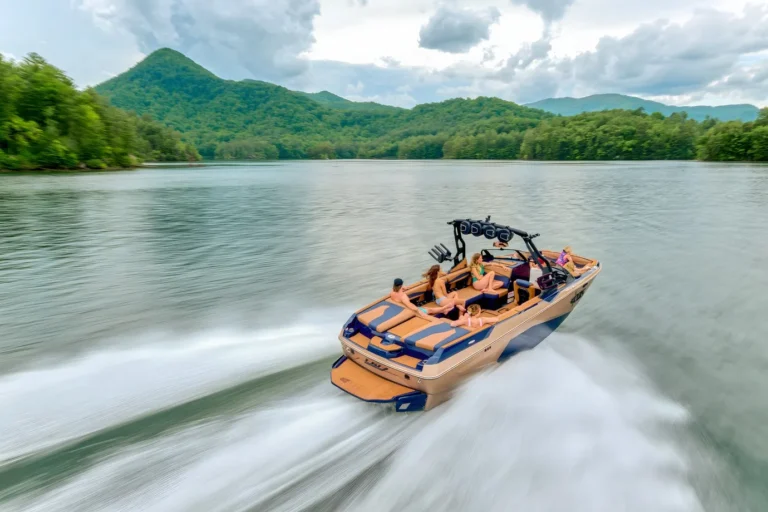
A V-drive boat was designed around the way many families use premium towboats now. The aft engine placement leaves the main cockpit open for wraparound seating, conversation, and easy movement. It creates a more inviting social environment without giving up the inboard performance and low-speed control that make towboats special.
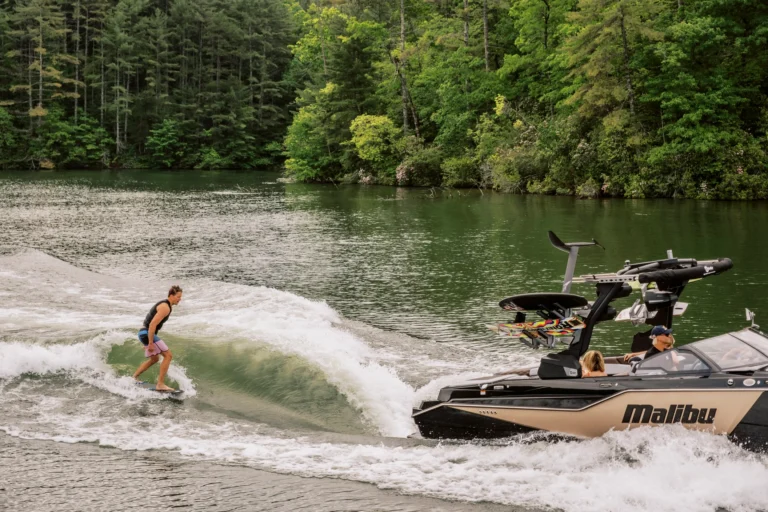
More weight in the rear also helps form the larger wake and surf wave that wake sports riders want. When paired with modern hull design, ballast systems, surf gates, and precise speed control, a V-drive can produce a wave that is clean, adjustable, and suited to different skill levels. The driver can tailor the experience for a first-time rider learning to get up or an advanced surfer working on airs and transfers.
This is why V-drive models have become the centerpiece of wake-focused boating. Malibu’s LSV, MXZ, M-Series, and Axis wake boat families are built around this style of ownership: premium performance behind the boat, plus a comfortable place for everyone aboard.
The V-drive layout also works exceptionally well for families who want variety. One morning may include wakeboarding. The afternoon may turn into cruising, swimming, and anchored time with friends. A boat with a spacious lounge, clear sightlines, generous storage, and a large rear social area allows the day to evolve without anyone feeling confined.
Wake Shape, Ski Performance, and Riding Priorities
The simplest way to compare these configurations is to start with the activity that matters most to you.
If your primary goal is course skiing or traditional open-water slalom, a direct drive deserves serious consideration. Its centered weight and flatter wake are closely aligned with what dedicated skiers look for. Buyers who value a classic, purpose-built inboard may also prefer the more focused character of this configuration.
If wake surfing is at the top of your list, a V-drive is the stronger fit in nearly every case. The rearward engine position complements the stern-biased weight distribution required for a quality surf wave. Modern V-drive towboats also offer far more ability to shape and fine-tune the wave as your riders progress.
For wakeboarding, both layouts can work, but the V-drive has the advantage for many owners. Its ballast capacity, wake-shaping technology, and interior space make it easier to build a substantial wake while bringing a full crew along for the ride.
A family that wants to do all three should be honest about frequency. If skiing happens every weekend and surfing is occasional, a direct drive may still align with your priorities. If surfing, boarding, and social cruising will define most outings, a V-drive offers the broader ownership experience.
Cabin Space Changes the Entire Day
A boat’s engine placement is not just a mechanical detail. It determines how people live aboard.
With a direct drive, the center-mounted engine box can serve as a practical seating surface and can feel familiar to longtime inboard owners. Still, it divides the cockpit. Moving from the bow to the transom often means stepping around the engine cover, and the available lounge space is more limited.
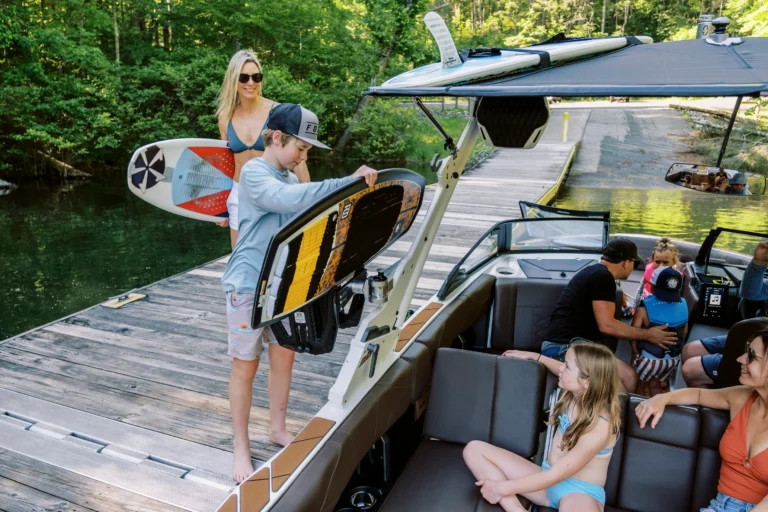
With a V-drive, the engine is tucked behind the cockpit, allowing designers to create a more open, connected layout. The boat becomes a gathering place. Passengers can face one another, riders can prepare boards without crowding the aisle, and parents can stay close to children while retaining a clear view of the water.
Storage matters here, too. Wakeboards, surfboards, life jackets, towels, and the essentials of a full South Florida boat day add up quickly. A V-drive’s larger cockpit and rear-engine layout generally give designers more flexibility to create useful storage and a less cluttered environment.
Handling and Ownership Considerations
A direct drive is often praised for its balanced feel and predictable tracking. Its weight sits near the boat’s center, which can make it feel especially composed during straight-line skiing runs. V-drives can feel different because the engine weight is farther back, but premium modern towboats are engineered to deliver confident handling, refined throttle response, and impressive control at towing speeds.
At the dock, both require an owner to understand inboard handling. The propeller’s rotation creates prop walk, and reverse maneuvering feels different from operating an outboard or sterndrive. Training matters more than the configuration alone. A thoughtful delivery orientation gives a new owner time to practice docking, trailering, ballast operation, safety procedures, and rider communication before a busy weekend arrives.
For Miami-area ownership, your boating environment also deserves attention. Saltwater, brackish conditions, marina access, bridge clearance, storage arrangements, and the distance to your preferred riding water all affect the right model and maintenance routine. A towboat should be selected around its intended use, then cared for with the discipline its environment requires.
Choosing the Right Configuration for Your Crew
The best decision comes from looking past a spec sheet. Consider how many people will normally join you, which watersports they actually enjoy, where you will keep the boat, and how often the boat will shift from riding sessions to relaxed cruising.
A direct drive is a focused choice for the owner who puts pure ski performance and classic inboard character first. A V-drive is a more flexible choice for owners who want a premium social layout, a serious surf wave, and room for family life to happen around the sport.
At Master Marine Prime, that conversation begins with how you picture your time on the water, not with a one-size-fits-all recommendation. The right boat should feel natural when the crew climbs aboard, the rider drops into the wave, and the day lasts longer than anyone planned.